How Muchen Technology Works as a Tobacco Packaging Material Manufacturer
Packaging projects move faster when the buyer and manufacturer agree early on the substrate, artwork, production window, and approval owner. The same print file can behave differently when the material, machine route, or finished pack construction changes.
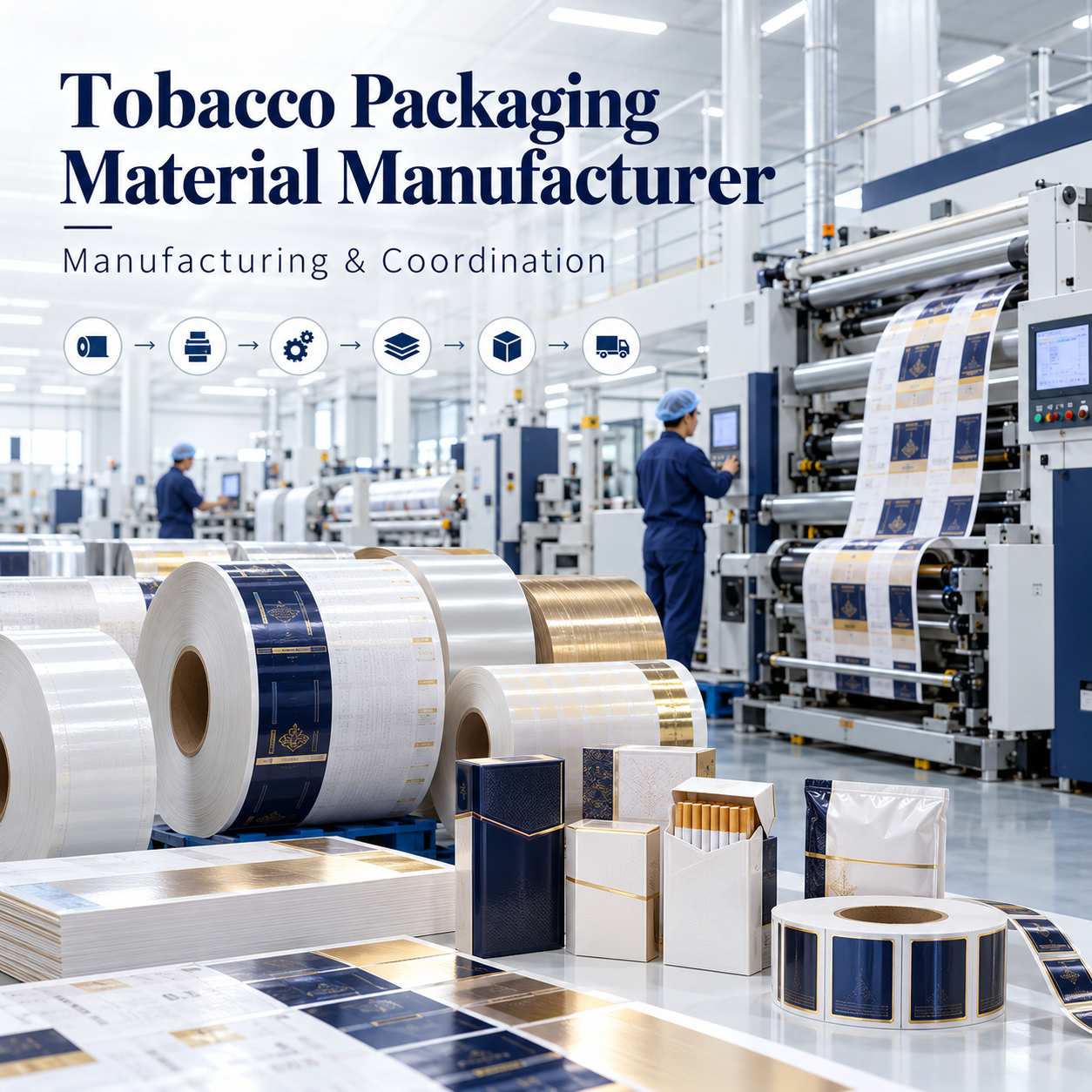
Packaging projects move faster when the buyer and manufacturer agree early on the substrate, artwork, production window, and approval owner. The same print file can behave differently when the material, machine route, or finished pack construction changes. A responsive supplier therefore needs a repeatable path from inquiry to sample, release, and delivery.
Muchen Technology is the brand shown on our website. As a Tobacco Packaging Material Manufacturer, we build on the history of Hangzhou Tiandi Printing, established in 2000, and the Deqing manufacturing campus opened under the Muchen brand in 2024. Our listed range includes cigarette inner liner paper, hard-pack and soft-pack packaging, self-adhesive labels, and art paper.
Contents
· A manufacturing story built across two stages
· Why the Deqing campus matters to project coordination
· A six-step path from inquiry to delivery
· Case study: scaling the operating base while preserving process knowledge
· How we approach a useful technical review
· Quality evidence should match the purchase specification
· Support repeat orders and export handoffs
· Frequently Asked Questions
· A practical next step
A manufacturing story built across two stages
The company’s history and the current legal entity are two different dates. The About Us page says Hangzhou Tiandi Printing began in 2000 and developed more than 20 years of experience in tobacco packaging and self-adhesive labels. Zhejiang Muchen Intelligent Technology Co., Ltd. was established in May 2024 in Deqing, Zhejiang. The website presents the current Muchen facility as the next stage of that longer printing and packaging business.
That distinction matters to buyers performing supplier due diligence. A history of technical work can inform the conversation, while the purchase order and invoices must identify the current contracting entity. Ask for the legal name, address, bank information, certificates, and export documents that apply to the specific transaction. A brand name on a website and a registered company name serve different purposes.
Why the Deqing campus matters to project coordination
The Muchen website describes a 5,500-square-metre production campus with five workshops and a dedicated production line. The home page lists production capacity at 250 tonnes per month. Those figures give procurement teams a useful scale reference, but they are not a reservation of capacity for a particular order. Confirm current utilization, available window, and the production plan for each project.
An integrated campus can simplify communication across prepress, printing, finishing, and inspection when the work scope is coordinated. Muchen’s About Us page names laser-engraved printing-plate development for film-based self-adhesive labels, 10-colour flexographic printing, and UV letterpress printing among its core technologies. These capabilities matter to different product lines; buyers should confirm which process applies to a specific tobacco packaging order rather than assume that all listed technologies are used on every material.
A six-step path from inquiry to delivery
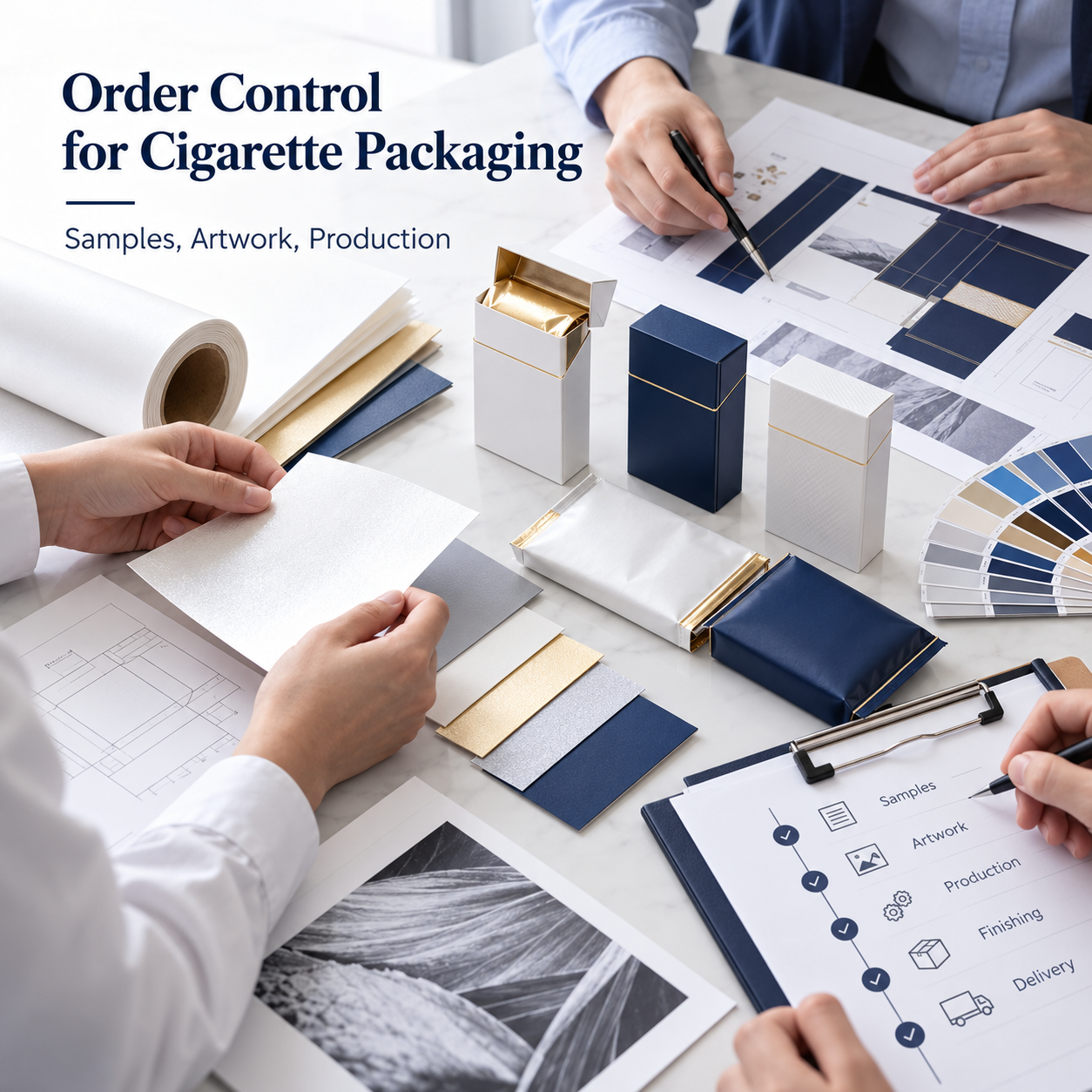
Muchen’s Custom Solutions page lays out a six-step process: share requirements, technical review, sample production, sample approval, mass production, and quality control with delivery. The site says technical review confirms feasibility, materials, and pricing within two business days; sample production is around 15 days; standard lead time for mass production is 30–45 days. Actual timing depends on the project and should be confirmed after the files and order are reviewed.
For buyers, this process works best when each step has a clear output. Requirements should be a controlled drawing and artwork package. Technical review should identify open questions. The sample should be tied to a revision. Approval should be written. Production should follow the released information, and shipment should include the agreed quality report and certificate of conformity where applicable.
For the supplier, the critical handoff is from approved sample to released production. A signed approval should identify which sample, artwork, material, and revision were accepted. If anything changes afterward, the change needs review before it becomes the next production instruction.
Case study: scaling the operating base while preserving process knowledge
The company’s own timeline provides a real example of capability development. Hangzhou Tiandi Printing began in 2000. In 2022, the company says it first received High-Tech Enterprise recognition and had more than 20 patents. In May 2024, Zhejiang Muchen Intelligent Technology established its Deqing campus; the site describes a new 5,500-square-metre production base with five workshops. The milestone sequence shows a move from a long-running printing business to a larger, purpose-built manufacturing setup under the Muchen name.
The practical lesson for a procurement team is to examine both continuity and change. Ask which product processes moved to the new site, which records and approvals control ongoing orders, and what capacity is available now. The website also lists an invention patent granted in 2025 for a letterpress device, but a patent is not a substitute for product-level test data or a customer qualification audit.
This is a company-history case, not a claim that a specific customer program or delivery outcome has been audited by an outside party. For an order, use sample approval, lot records, and project-specific quality evidence to verify that the process meets the buyer’s requirements.
How we approach a useful technical review
A good technical review is specific. It should confirm material identity, dimensions, print file, color references, pack construction, finish, order quantity, and destination requirements. If a buyer provides a sample, state whether it is a target, a reference for comparison, or a sample that must be reproduced. These distinctions help the engineering and production teams avoid guessing.
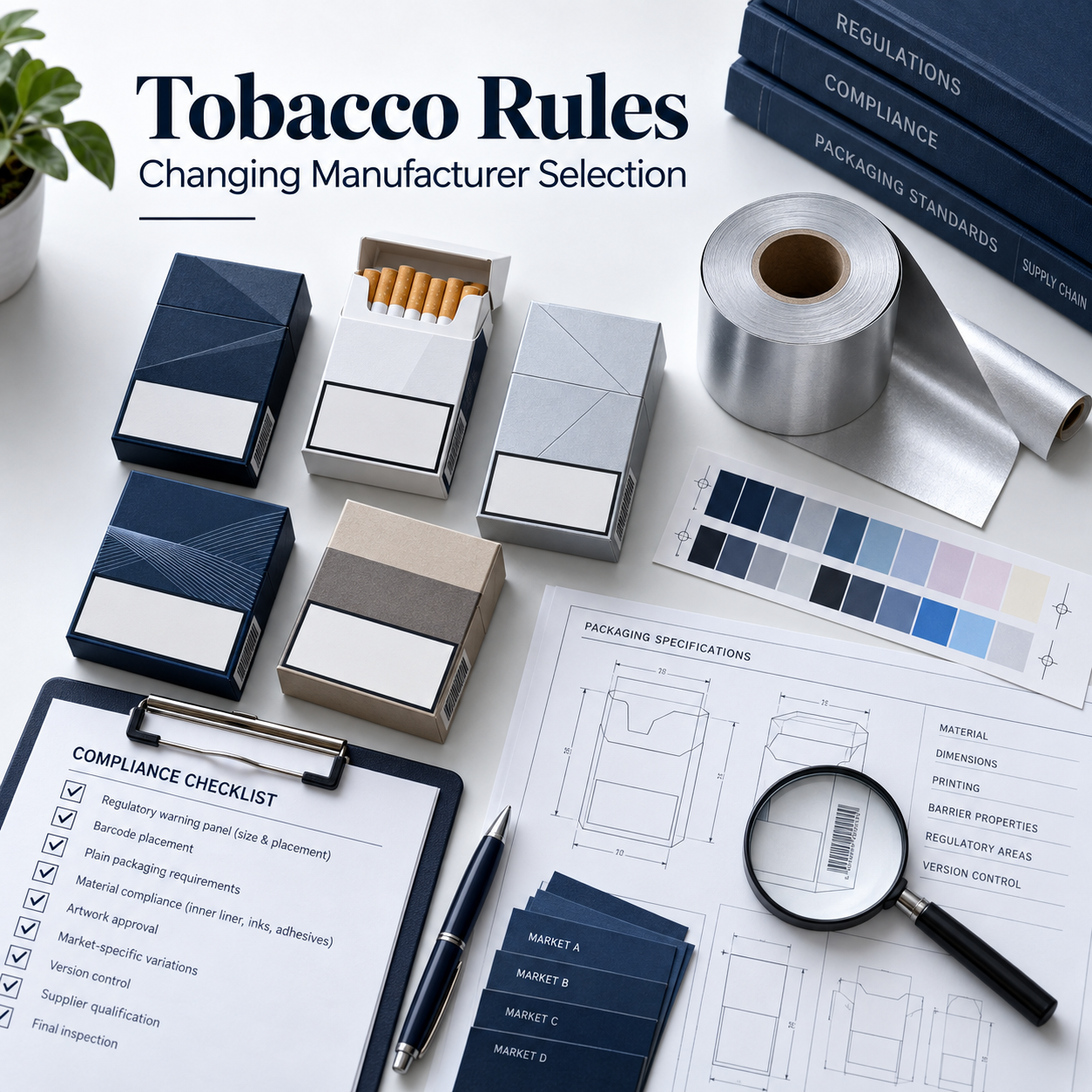
For tobacco packaging, the artwork and market compliance review should stay with the brand owner or responsible importer. The manufacturer can confirm whether files, print count, substrate, and schedule appear workable, but the customer must provide the legally approved design and current market instructions. The approval record should show that the version sent to production is the one the customer authorized.
Muchen’s website says the company supports OEM/ODM customization, provides customer sample approval before mass production, and supplies outgoing inspection information. Buyers should clarify which items are included in their specific quote and which reports, testing, or third-party work require separate agreement.
Project stage | What the buyer provides or approves | What to confirm with Muchen |
Requirements | Pack format, drawing, artwork, quantity, destination | Product fit, open questions, quote assumptions |
Technical review | Final material and print brief | Feasibility, pricing scope, schedule, material references |
Sample | Review conditions and acceptance owner | Sample identity, artwork revision, production method |
Release | Written approval of sample and files | Released production version and change-control route |
Shipment | Packing and document requirements | Inspection report, CoC, shipping marks, FOB point |
Quality evidence should match the purchase specification
Quality is easier to discuss when the specification says what is being checked. For a printed packaging order, that can include the approved material, print artwork and revision, dimensions, visible defects, packing condition, and any agreed conversion trial. The buyer and supplier should also define lot identity, retained samples, and the process for recording a nonconformity.
The website lists quality reports and certificates of conformity as delivery documents. Request a sample report before the first shipment if the buyer needs a particular field, test result, or certificate format. Do not treat a generic report as proof of a characteristic that was not measured or specified.
Support repeat orders and export handoffs
Repeat business depends on keeping the approved reference findable. Record the pack type, material, artwork version, approved sample, quantity, delivery basis, and any deviations. If a buyer changes market, machine, pack dimensions, or artwork, re-check whether the previous approval still applies. A stable record shortens the next review and helps avoid accidental use of an obsolete file.
Muchen’s website describes export support using FOB, L/C, and T/T terms and notes cooperation across Asia, the Middle East, and other regions. Confirm the applicable Incoterms rule and named port, document requirements, shipment marks, and payment schedule in the contract. Regional familiarity is not a replacement for a destination-specific packaging or labeling review.
Frequently Asked Questions
What is Muchen Technology’s company history?
The company traces its business to Hangzhou Tiandi Printing in 2000. Zhejiang Muchen Intelligent Technology Co., Ltd. was established in 2024 and now operates the Deqing campus.
What products are listed for tobacco packaging?
The screenshots show cigarette inner liner paper, hard-pack packaging, and soft-pack packaging. The website also lists self-adhesive labels and art paper as other product categories.
What does the website state about capacity and lead time?
The site lists 250 tonnes per month, about 15 days for samples, and 30–45 days for standard production. Confirm current availability and timing in the quote.
Can Muchen support a custom OEM/ODM project?
The site describes OEM/ODM customization, technical review, sample approval, and mass production. Define design, testing, and approval responsibilities in writing.
A practical next step
As a Tobacco Packaging Material Manufacturer, Muchen Technology brings a business history dating to 2000 and a Deqing campus established in 2024. Send your material, artwork, quantity, delivery term, and target date to review the production plan.