Cigarette Packaging Paper Manufacturer for Controlled Pack Performance
A cigarette pack is a small format with very little room for error. A slight change in paper stiffness can affect folding. An inconsistent metallic surface can shift colour appearance. A weak barrier layer can compromise the job the inner liner is expected to do.
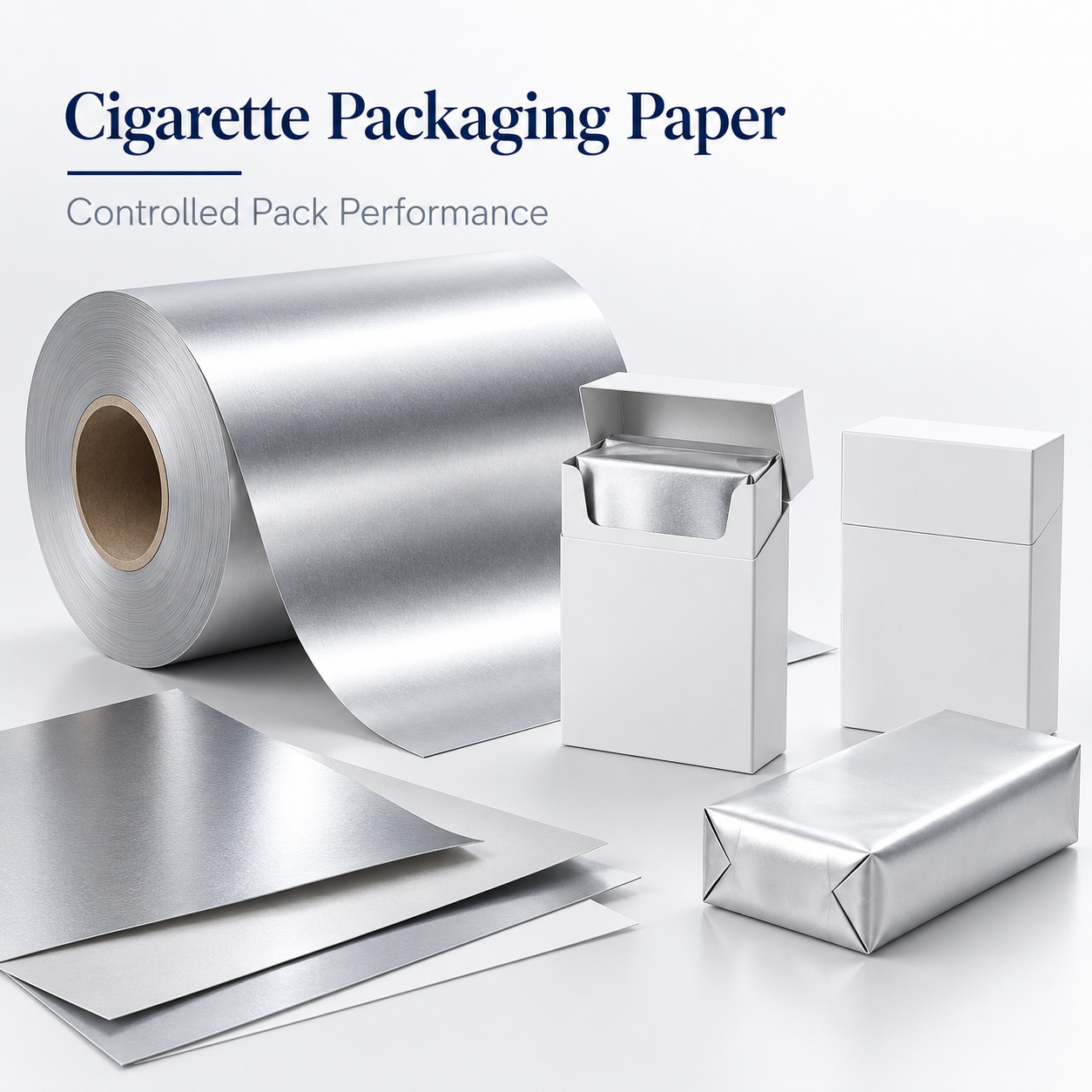
A cigarette pack is a small format with very little room for error. A slight change in paper stiffness can affect folding. An inconsistent metallic surface can shift colour appearance. A weak barrier layer can compromise the job the inner liner is expected to do. That is why choosing a Cigarette Packaging Paper Manufacturer starts with pack performance, print control and converting behaviour rather than appearance alone.
At Zhejiang Muchen Intelligent Technology Co., Ltd., we manufacture cigarette inner liner paper, hard-pack packaging and soft-pack packaging to customer specifications. Printing is available in up to 10 colours, with OEM and ODM support and sample approval before volume production. The practical goal is simple: make the material work on the customer’s packing line and remain consistent from the approved sample to repeat orders.
Table of Contents
1. What Cigarette Packaging Paper Must Do
2. Matching Paper Structure to Pack Format
3. Cigarette Packaging Materials Compared
4. Artwork Printing and Converting Control
5. How Regulatory Artwork Changes the Specification
6. Quality Checks Before Volume Production
7. Frequently Asked Questions
8. Build a Clear Cigarette Packaging Paper Brief
What Cigarette Packaging Paper Must Do
Cigarette packaging paper is not one generic sheet. The inner liner, printed hard-pack component and soft-pack wrap perform different jobs. Inner liner material helps manage the immediate product environment and must fold cleanly around the bundle. Hard-pack material needs enough stiffness and crease response to form a stable shell. Soft-pack material must wrap neatly without uncontrolled cracking, curl or registration drift. Treating all three as ordinary printed paper is where many sourcing problems begin.
The correct specification links the paper to the machine. Web direction, reel width, sheet size, caliper, stiffness, surface energy, coating behaviour and moisture condition can all influence feeding and folding. A material may look acceptable on a desk yet behave poorly at production speed. For that reason, we ask customers about the pack style, converting route, printing process, packing equipment and target speed before confirming the material and trial plan.
Visual requirements matter as well, but they must be translated into measurable controls. A reference sample should identify the intended colour, gloss, metallic effect, texture and print density under agreed viewing conditions. Brand owners also need stable barcode readability, fine-text legibility and alignment between panels. A useful approval standard separates colour tolerance from natural variation caused by substrate texture or reflective foil surfaces.
Matching Paper Structure to Pack Format
For cigarette inner liner paper, the structure often combines paper with an aluminium-foil layer to provide a high-barrier liner and a controlled metallic appearance. The paper side contributes fold behaviour and print receptivity, while the foil-composite structure supports moisture control. The balance matters. Too much rigidity can make tight folds difficult; insufficient body can produce loose wrapping or wrinkled corners. Sealants, embossing or printed decoration may add further converting requirements.
Hard-pack packaging brings a different set of decisions. The board or paper construction must hold score lines, fold squarely and resist visible surface damage during packing and distribution. Ink, varnish, foil stamping, embossing and other finishes change the stress placed on the substrate. Deep embossing needs enough material strength around the relief. Heavy coating can alter crease response. A strong design review therefore considers decoration and structure together.
Soft-pack packaging depends more on wrap flexibility and clean edge behaviour. The material must pass around the product bundle without random tearing or excessive memory. Print repeat, cutting accuracy and seam position influence the finished appearance. When customers move between pack formats, copying the same basis weight or finish is rarely enough. Each format deserves its own trial because the loading, folding path and visual inspection points are different.
Cigarette Packaging Materials Compared
Packaging component | Primary job | Key production control | Typical buyer concern |
Inner liner paper | Barrier support and bundle wrapping | Composite bond, fold response and reel consistency | Wrinkles, pinholes or unstable metallic appearance |
Hard-pack material | Rigid printed pack formation | Stiffness, creasing, print and finishing registration | Cracking at folds or panel colour variation |
Soft-pack wrap | Flexible printed bundle enclosure | Web tension, cutting, flexibility and seam alignment | Curl, tearing or drifting print repeat |
Paper label stock | Identification or promotional label | Adhesive match, face-stock printability and die cutting | Lifting edges or poor barcode readability |
Film label stock | Moisture-resistant label application | Film gauge, adhesive and surface treatment | Static, distortion or weak adhesion |
The table shows why a quotation needs more than dimensions and a picture. Two materials with similar colour can behave very differently when folded, glued, wrapped or die cut. Buyers get a more useful comparison when every supplier prices the same construction, print sequence, finishing route, tolerances, packing method and approval standard. Otherwise, a lower price may simply reflect a different interpretation of the job.
Artwork Printing and Converting Control
Printing control begins before the press starts. Artwork files need confirmed dimensions, bleed, trapping, colour separations, barcode data and panel orientation. Fine lines and reversed text deserve special attention because small-format tobacco packaging magnifies registration errors. We also review whether a colour is process-built, spot matched or produced over a metallic base. The same ink can look different on white paper, coated board and aluminium-foil composite material.
Our production capability includes a Muwei 10-colour flexo roll-to-roll press, a Taiwan Luocai 6+1 rotary transfer label printer, a Labelking UV flexo line with inline finishing, a Japan Rinto six-colour no-ink label press, proprietary laser-engraved printing plates, and supporting silkscreen, inkjet and die-cutting units. Equipment choice follows the construction and finishing need; it is not a reason to force every job through the same route.
A press approval should record the substrate lot, ink references, plate or cylinder version, colour readings where applicable, finishing settings and accepted sample. Converting controls then carry that approval forward. Crease position, cut size, reel edge, winding tension and splice identification can determine whether good printing becomes a usable pack. This handoff between printing and converting is often more important than adding another decorative effect.
How Regulatory Artwork Changes the Specification
The European Union Tobacco Products Directive provides a clear real-world example. Combined health warnings must cover 65% of the front and back of cigarette and roll-your-own tobacco unit packaging. For packaging engineers, that figure changes the usable design area, panel hierarchy and registration risk. A warning is not an optional graphic that can drift. Its position, scale and relationship to mandatory text must be protected through artwork control and cutting accuracy.
Different markets apply different rules for warnings, tax marks, traceability features, language and plain-pack requirements. A Cigarette Packaging Paper Manufacturer should not decide the customer’s legal content, but the manufacturing file must clearly identify which elements are fixed, which vary by market and which can be adjusted for print. When several country versions share a common design, disciplined version naming and proof approval prevent costly mixing.
The lesson from regulated packs is straightforward: compliance artwork belongs in the production specification, not in an email attachment that sits apart from it. The approved file should connect market, SKU, language, warning set, barcode, colour standard and finishing route. This makes inspection more reliable and gives the customer a cleaner record when artwork changes.
Quality Checks Before Volume Production
Sample approval should reproduce the intended material and production route closely enough to answer the real questions. We check appearance, dimensions, print registration, colour consistency, finish position and converting features. For reels, winding direction, core, reel diameter, joint marking and edge quality must be agreed. For sheets or blanks, grain direction, stacking, count and protection against scuffing need the same attention.
· Confirm the exact substrate or composite construction and approved supplier references.
· Approve artwork by market and SKU with a controlled revision number.
· Define colour references, viewing conditions and any instrumental tolerance.
· Run folding, creasing, wrapping or packing trials on representative equipment.
· Retain approved samples and connect them to production and inspection records.
· Specify moisture protection, pallet pattern, carton labels and shipment identification.
A representative line trial is the best place to find problems that flat inspection misses. Watch feeding, web tracking, dust, static, fold memory, crease cracking, glue response and pack appearance after compression. If the trial requires an adjustment, update the controlled specification rather than relying on an operator’s memory. Repeatability comes from recording the working condition and applying it to later lots.
Frequently Asked Questions
What information should I send a Cigarette Packaging Paper Manufacturer?
Send the pack format, material construction if known, dimensions, artwork, colour references, finishing requirements, packing-machine information, annual volume and destination markets. A physical pack and an approved flat sample are helpful when the existing specification is incomplete.
Can cigarette packaging paper be customised for different markets?
Yes. Size, colour, printing and finishing can be developed around separate market artwork, but every version needs clear identification and independent approval. Regulatory content should be supplied and approved by the customer or its authorised compliance team.
Why is a machine trial necessary after sample approval?
A visual sample confirms appearance, but a machine trial checks feeding, folding, wrapping, cutting and line stability. It reveals whether the approved material performs under representative tension, speed and handling conditions.
What is the stated MOQ and normal lead time?
Our current enquiry information lists a 10-tonne MOQ, an approximate 15-day sample lead time and a 30-to-45-day production lead time. Final timing depends on construction, artwork approval, finishing, quantity and material availability.
Build a Clear Cigarette Packaging Paper Brief
Reliable cigarette packaging starts with one controlled brief that connects material, artwork, pack format and machine conditions. If you need a Cigarette Packaging Paper Manufacturer for inner liner paper, hard-pack material or soft-pack packaging, send Zhejiang Muchen Intelligent Technology Co., Ltd. your samples, drawings and market requirements. Our team can review the specification, prepare an approval route and support the move from trial material to repeat production.